Maximizing Energy Stores Helps Delay Fatigue
Food supplies the energy and components our bodies need for growth and movement. In order for our bodies to use the energy stored in food, we must first extract it through digestion and store it so we can continually draw on it to produce the energy molecule that drives all movements of the body – ATP. In other words, we consume energy, store it, use it and deplete the supply. We eat again and the cycle continues. The athlete’s goal is to have their stomachs fairly empty while energy stores are full at the st
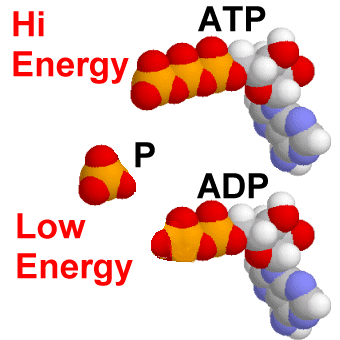
art of training or competition. Following a specific eating pattern can maximize the production, storage and use of energy (see Performance Nutrition for Young Athletes). By properly loading your energy systems that are rapidly depleted during exercise, you can delay fatigue and optimize performance during activity.
The High Intensity Energy System
The high intensity energy system is called the Phosphocreatine System or the ATP-PC System. Having fully loaded ATP stores is important to athletes who perform high intensity activities such as weightlifting, certain track & field events, football or other sports that include sprint and explosive-type activities. This system is responsible for producing the ATP that is used during the first 10-15 seconds of strenuous movements, after which the stores are depleted. Creatine phosphate is a naturally occurring compound used in this system to maintain ATP or short-term energy production. By loading as much creatine as the system will hold, we can delay depletion and speed up the regeneration of ATP. This is why supplementation of creatine has become so popular and doing so has been shown to enhance performance in certain sports. Weight gain due to water and increased muscle size are common with creatine supplementation and may be beneficial for certain athletes. However, in some sports, any potential benefits from creatine use may be offset by weight gain. To load this high intensity energy system with food, it would be necessary to consume unrealistic quantities of meat to achieve maximum levels. Because consuming large quantities of muscle/red meats is not practical or healthy, supplementation has become the preferred and acceptable method. Hundreds of research studies have established the safety and performance benefits of creatine supplementation.
While creatine appears very safe and beneficial for adult strength athletes, you may ask, “Is creatine supplementation safe for athletes under 18 years of age?” And everyone does! Definitely one of the most common questions I get at all lectures. My answer at this point in time is quick and easy:
Based on the fact that there is very little data on the use of creatine supplements for athletes under the age of 18, most professionals (including the dotFIT Research & Development team) play it safe and recommend that the qualified athlete reach the age of 18 before considering the use of creatine. Because this is such a hot topic, I will dedicate a complete article related to the use of creatine for all athletes of all ages including proper loading procedures so stay tuned. In the meantime follow your dotFIT menu plans including meal times and protein recommendations to help maximize your ATP-PC energy system.
The Moderate to High Intensity Energy System
The moderate to high intensity energy system is called the Glycolytic Energy System. Glycolysis is the breakdown of stored carbohydrates (glycogen) for energy. This system is directly responsible for the production of ATP during moderate to high-intensity exercise longer than 10 to 15 seconds and also helps fuel endurance activities. Filling this system to capacity can dramatically delay the onset of fatigue for almost all training/events lasting longer than one hour including repeated short sessions of high intensity activity (e.g. soccer, football, basketball, etc.). This means less fatigue, higher quality workouts and improved performance. Just as competitive strength and power athletes load creatine, trained endurance athletes load carbohydrates because of the proven performance benefits. (Again, we will dedicate an entire article in the near future to the practice of carbohydrate loading for endurance athletes).
The quantity, type (whole food vs. liquid) and timing of carbohydrate intake must all be considered in order to fill this system without experiencing stomach upset or other adverse effects during activity. Appropriate pre and post-training snacks can effectively top off energy stores and maximize recovery.
Following your personalized dotFIT Athletic Performance meal plan, paying special attention to your carbohydrate amounts and timing around your training, you will ensure optimal energy stores for the Glycolitc Energy System. No matter what your sport, filling this system properly before and after each training bout/event can dramatically delay fatigue, giving you the potential for a great “fourth quarter” effort versus a tired ending performance.
Below is a basic outline on meal timing and carbohydrate amounts per pound (your dotFIT program will contain your exact personalized recommendations based on your body statistics age, sport and goal):
Pre & Post-Training/Event Snacks
- Your pre-training snack should be consumed 10-40 minutes before activity
- Your post-training snack should be consumed immediately after the workout or event
- The pre/post snack is usually in liquid form but you may substitute solid meal replacements (bars) based on preference, venue and/or convenience, any other appropriate foods (carbohydrate higher than protein with low fat)
- Carbohydrate in a pre/post snacks can range from 0.25 grams to 0.5 gram per pound of bodyweight (¼ to ½ gms/lb). Higher end of the range for long endurance-type activities and lower for strength training or workouts lasting less than an hour
Large Pre & Post-Training/Event Meals
- Your large pre-event meal should be eaten approximately 2-3 hours before major activity
- Your large post-event meal should be eaten 1-2 hours after major activity depending on post-training snack (1 hour for <200 calorie snack; 1-2 hours for 200+ calorie snack)
- The large pre/post meal should be solid food made up of approximately 60% carbohydrate, 20% protein, and 20% fat (carbohydrate should be 3 times higher than protein)
Early Morning Training
- If you train soon after rising and have no time for complete digestion of a large meal, make sure you consume a large pre-training type meal as your final meal of the previous day and consume only the pre-workout snack before your workout
By knowing the energy system(s) you use during workouts and events, and properly maximizing your energy stores, you can effectively delay fatigue and reach your peak performance.
Stay tuned, our next article will specifically address pre- and post-exercise meals/snacks to maximize performance & recovery; it will provide sample formulas as well. We will also fully address creatine supplementation and carbohydrate loading in the near future for highly competitive athletes.